 how-to
7 Ways Advent Letters Help Young Children Grow
Last Updated: November 1, 2026
Quick Summary
Advent letters can be a good fit for young children when an adult reads them aloud in short sessions and the child is never asked to explain the theology back. For three- and five-year-olds, the story and sense of anticipation often matter more than understanding every word.
- Toddlers enjoy the rhythm of the reading and the feel of the paper, so keep sessions to a minute or two.
- Preschoolers can follow a simple storyline and may dictate a sentence or draw a picture instead of writing.
- Early elementary children can retell the story in their own words and write two or three sentences.
- Shorten the session rather than push through if a child loses interest, since the ritual matters most.
Table of Contents
- Are Advent Letters Good for Young Children?
- What Young Children Can Realistically Understand
- Age-by-Age Guidance for Advent Letters
- Advent Devotions for Preschoolers
- Short Advent Prayers for Children to Read Together
- Advent Letters for Kids: A Simple Step-by-Step Activity
- Advent Activities for Toddlers Who Cannot Write Yet
- Setting Realistic Expectations and Handling Religious Framing
- Frequently Asked Questions
Are Advent Letters Good for Young Children?
Advent letters can be a good fit for young children, but the answer depends on the child's age and what the letters are meant to do. For a three-year-old and a five-year-old, the story and the feeling of anticipation often matter more than understanding every word. The Promise Letters™ writes each letter from the view of a Biblical figure, so the reading experience is built for families who want Scripture to feel close and personal.
Advent letters work best when you read them aloud, pause for questions, and let the child lead the conversation. A young child may not follow every detail, but they can still feel the excitement of a letter arriving and the calm of a bedtime story.
What Young Children Can Realistically Understand
Young children grasp stories through characters, emotions, and repetition far more than through abstract ideas. For guidance on picking resources suited to this stage, see choosing age-appropriate Bible resources for young children. They can usually follow who is speaking, what they are worried about, and what happens next.
Many parents find that children under six respond best when:
- The letter is read aloud by a trusted adult
- The story is short and uses simple, concrete images
- The child has a chance to ask questions or point to pictures
- The reading is repeated across several days
A common mistake is expecting a child to explain the theology back to you. Instead, look for signs of engagement, like a child who asks to hear the story again or who acts out a part.
Age-by-Age Guidance for Advent Letters
Every child develops at a different pace, so use these ranges as a starting point rather than a rule. The goal is not to finish every letter or to produce a written response, it is to build a short, repeatable moment of story and wonder. Here is what most families find realistic at each stage.
Toddlers (ages 1 to 3)
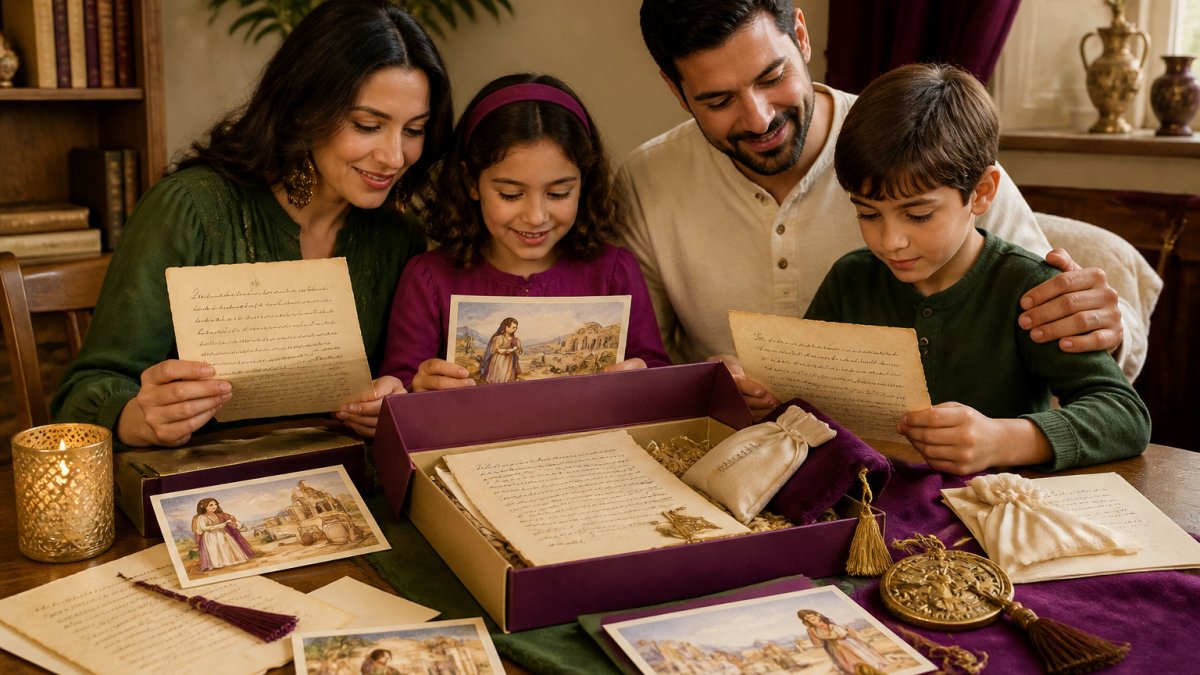
Toddlers mostly enjoy the rhythm of the reading and the feel of the paper. Keep sessions to a minute or two, choose a single image to point at, and let them touch the ornament or postcard that comes with the letter. They will not follow the plot, and that is fine. Look for engagement signs like reaching for the card, pointing at a picture, or asking for "again." Adults should do all the reading and all the writing at this age.
Preschoolers (ages 3 to 5)
Preschoolers can follow a simple storyline and often remember a character's name. Ask one or two open questions after reading, such as "What do you think Mary felt?" Expect short answers and playful follow-ups. They can dictate a single sentence for an adult to write, or draw a picture in place of words. A common pattern is that the drawing carries more meaning than the sentence at this age.
Early elementary (ages 6 to 8)
Children in this range can usually retell the story in their own words, connect it to something in their own life, and write a short letter themselves, often two or three sentences. They may want to choose a prayer or add a hope for someone else. This is also the age when questions about faith framing become more direct, so be ready to answer simply and honestly.
A quick suitability check
Advent letters are a good fit for young children when three things are true: an adult reads aloud, sessions stay short, and the child is never asked to explain the theology back to you. They are a poor fit when they become a performance task, a writing assignment, or a nightly power struggle. If a child loses interest, shorten the session rather than pushing through, the ritual matters more than the content on any single day.
If you want a format that already builds in short, read-aloud letters from a Biblical figure's point of view, you can explore the Advent Mailed Experience to see how the schedule is arranged.
Advent Devotions for Preschoolers
A short daily devotion can anchor the Advent season. Read one letter, pause for a short prayer, and close with a single sentence the child can repeat. This routine helps the story become familiar, which is often what makes it meaningful for young children.
For a simple method, read the passage once to yourself, then retell it aloud in your own words. Our guide on How to Study the Bible Through Storytelling walks through this approach step by step.
Short Advent Prayers for Children to Read Together
Short prayers work well because young children can say them with you. Try lines like these:
- "Thank you, God, for the good news of Jesus."
- "Help us wait with hope, one day at a time."
- "Thank you for the people who told us this story."
Keep prayers to one or two sentences and let the child choose a word to add.
Advent Letters for Kids: A Simple Step-by-Step Activity
This activity works for children who can hold a crayon, and it can be adapted for younger ones or children with different communication or motor needs. Plan for about five to ten minutes, short enough to fit between dinner and bedtime.

Materials: the day's letter, a blank page or a simple printable, crayons or markers, and a small display spot such as a corkboard, a string with clips, or a keepsake envelope.
- Read the day's letter aloud together. Pause once to let the child point at a picture or name a character.
- Ask one question about the story, not a quiz, just an invitation. "What would you have done?" or "How do you think they felt?"
- Have the child draw a picture of the character, the scene, or something the story made them think of.
- Write the child's words underneath, or let them dictate a short sentence. For pre-writers, a single word or a symbol is enough.
- Place the page on the display or inside the envelope, and close with one short prayer or a single sentence the child can repeat.
Sample prompts for pre-writers and early writers:
- "Draw one thing you would bring to Baby Jesus."
- "What is one thing you are thankful for today?"
- "Who would you like to pray for tonight?"
- "Draw how you think the stable smelled or looked."
Non-writing alternatives: Children who cannot yet write, or who find writing frustrating, can take part by drawing, choosing from two picture prompts, dictating to an adult, or placing a sticker or symbol on the page. The point is participation, not output.
Handling sensitive wishes or worries: If a child writes something heavy, a worry about a family member, a wish that feels sad, respond gently and without judgment. Thank them for sharing, keep the letter private if they want it private, and follow up later if needed. Avoid correcting or grading what they wrote.
Letters to Baby Jesus vs. Santa letters: These are different traditions. A Santa letter usually asks for gifts; a letter to Baby Jesus is typically about gratitude, hopes, or prayers. Families can do both, but it helps to name the difference so children are not confused about what each letter is for.
If you are looking for the letters themselves, you can explore the Advent Mailed Experience to see how the monthly schedule is arranged.
Advent Activities for Toddlers Who Cannot Write Yet
Toddlers can still take part without writing. Let them press a finger into paint and make a mark on the page, sort paper ornaments by color, or place a postcard on the day's spot on a calendar. The goal is to make the moment physical and familiar, not to produce a finished piece.
Setting Realistic Expectations and Handling Religious Framing
Young children may lose focus, forget the story, or ask questions you cannot answer right away. That is normal. You do not need to explain every detail to make the time valuable.
If your family comes from a different tradition, it helps to talk through the framing before you begin. Decide how you will present the characters and what you want your child to take from each reading. Being honest about what you don't know, and inviting questions, usually serves young children well.
Advent letters can give young children a steady rhythm of story, prayer, and wonder through the season. Start small, keep the time short, and let the child's curiosity set the pace.
Frequently Asked Questions
What age is appropriate for Advent letters?
Advent letters can be introduced from about age three, when children begin to enjoy being read to and recognize that a letter is a special message. Younger toddlers can take part through the same letter read aloud with a picture or ornament to hold. Children under three usually enjoy the ritual and the object more than the words, so keep the reading short and the activity hands-on. Most families find that children aged four and five follow the story and begin asking questions about the people in it.
Can a 2-year-old enjoy an Advent letter tradition?
Yes, a two-year-old can enjoy an Advent letter tradition if the reading is brief and interactive. Let the child open the envelope, touch the ornament, and point to the illustration on the postcard while you read two or three sentences. Repetition helps young children, so reading the same short prayer each day builds familiarity. Expect short attention spans and treat any engagement, even a single moment of looking, as a successful part of the day.
How long should an Advent letter for a young child be?
A letter for a young child works best when it can be read aloud in under two minutes. Aim for three to six short sentences with simple words, one clear idea, and at least one thing the child can see or touch. Longer letters suit older children who can sit through a full story. If you are writing your own letter, keep sentences concrete, such as naming a family member or an object in the room, so the child can connect the words to their own life.
What should you write in an Advent letter to a child?
Write about what the child can understand and do: a simple thought about waiting for Christmas, a promise of love, a short Bible verse, and one thing you hope the child will do or notice that day. Include a prompt such as asking the child to draw something or say thank you to God. Avoid complicated theology and frightening themes. Keep the tone warm and encouraging, and sign off with the child's name so it feels personal.